High-Rise Bat Removal in Georgia
Georgia bats can use narrow joints in brick, stucco, coping, vents, and roof transitions. On a tall building, those openings may continue behind the exterior finish. We trace the active route and the surrounding defects before any part of the façade is sealed.
An Atlanta-area sighting may point to a concealed wall route
Bats often appear at dusk near a ledge or corner, but the roost opening may sit higher along the same masonry joint. Ground observations establish the active elevation. A rope inspection then checks the joint at working distance.
The survey records loose sealant, open returns, vents, and transitions that could become alternate entries. Those conditions are separated from the active exit so the building can repair them in the right order.
A work plan built for Georgia
Watch where the bats leave
An evening survey narrows the active area and helps distinguish a colony exit from bats simply feeding around the building.
Inspect the full masonry run
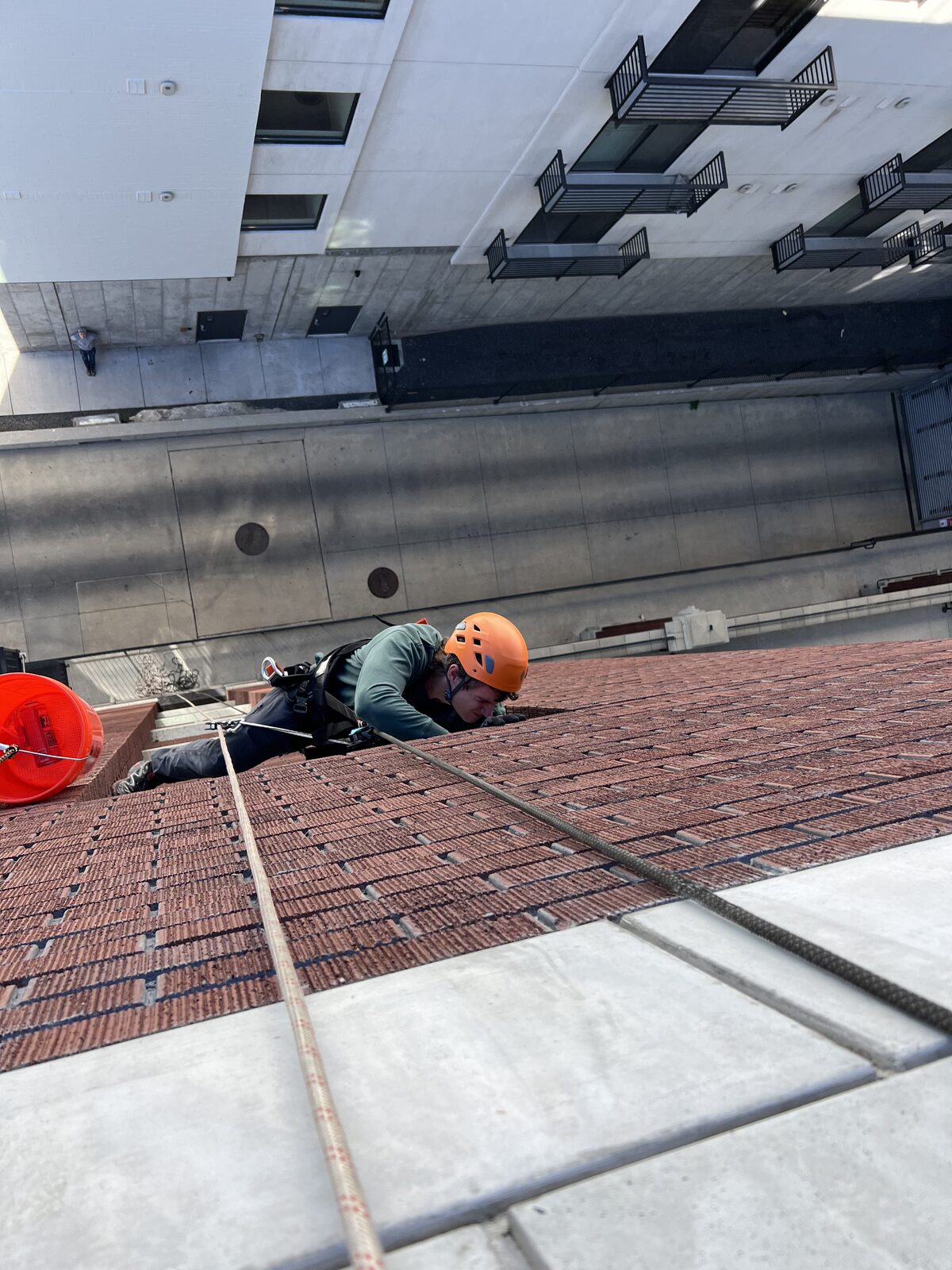
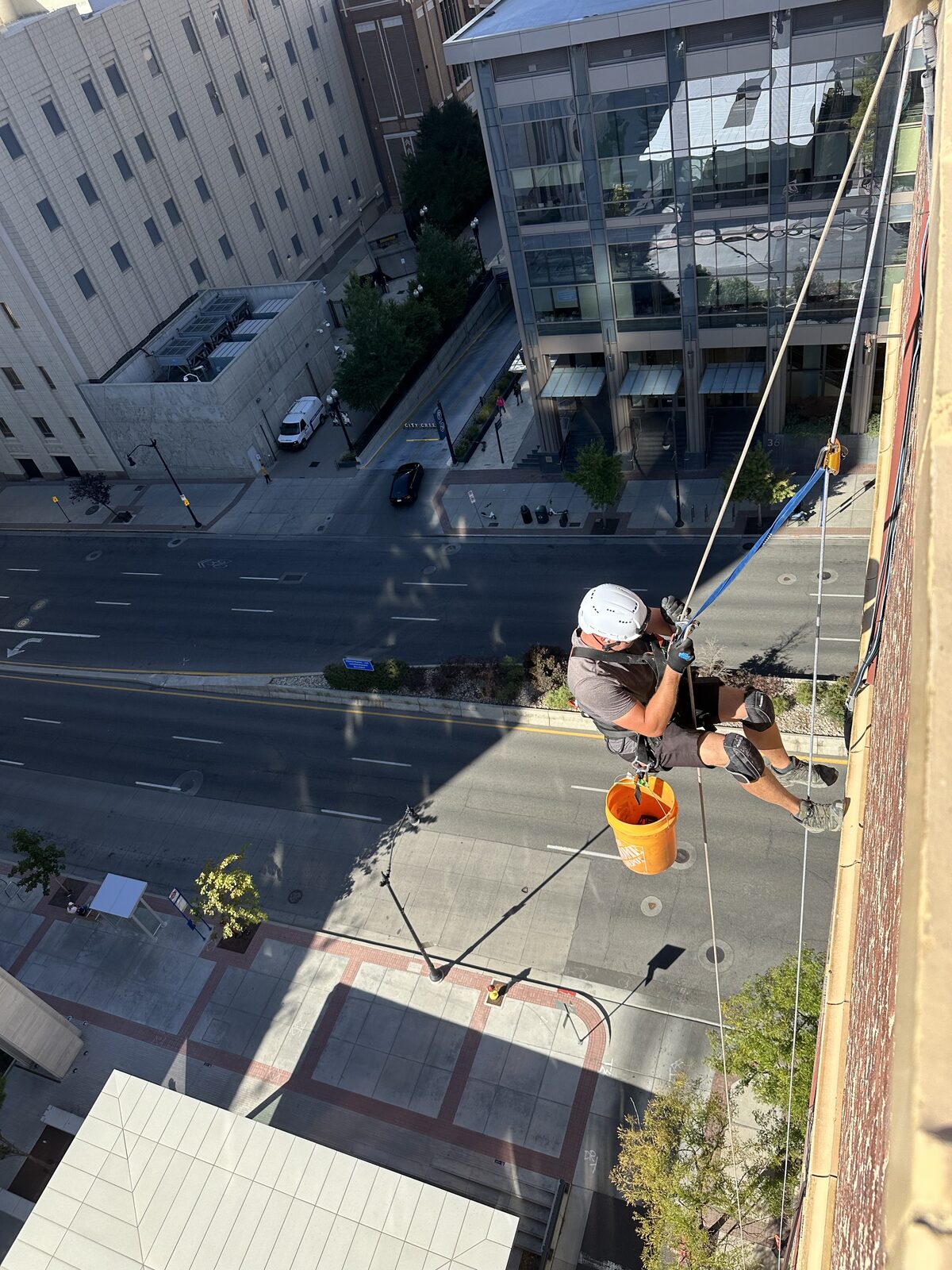
Rope access follows brick joints, stucco returns, coping, and vents beyond the first visible opening.
Follow Georgia maternity rules
Exclusion avoids April 1 through July 31 unless the work is handled under the state's licensed-operator requirements.
Repair and record the elevation
After bats clear the one-way exit, the active opening is closed and the completed exterior locations are documented.
Georgia access plans start at the sidewalk and roof
An office, hotel, or apartment building may have entrances and parking immediately below the active wall. The work plan defines temporary limits for those areas and gives management a schedule for notices.
On the roof, coping, equipment, and setbacks shape the rope path. Reviewing those conditions before mobilization prevents a simple wall repair from turning into an access change on the first day.
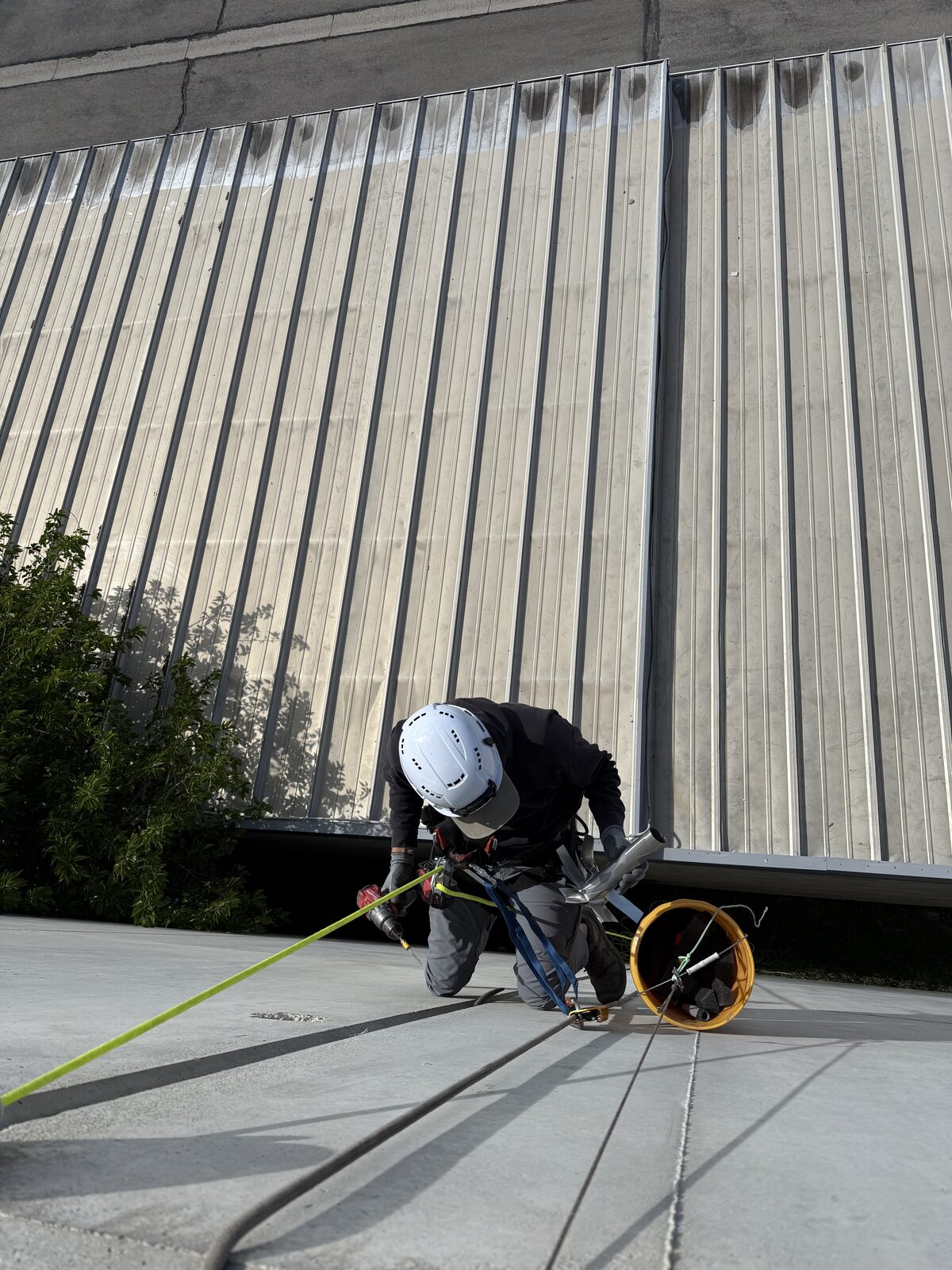
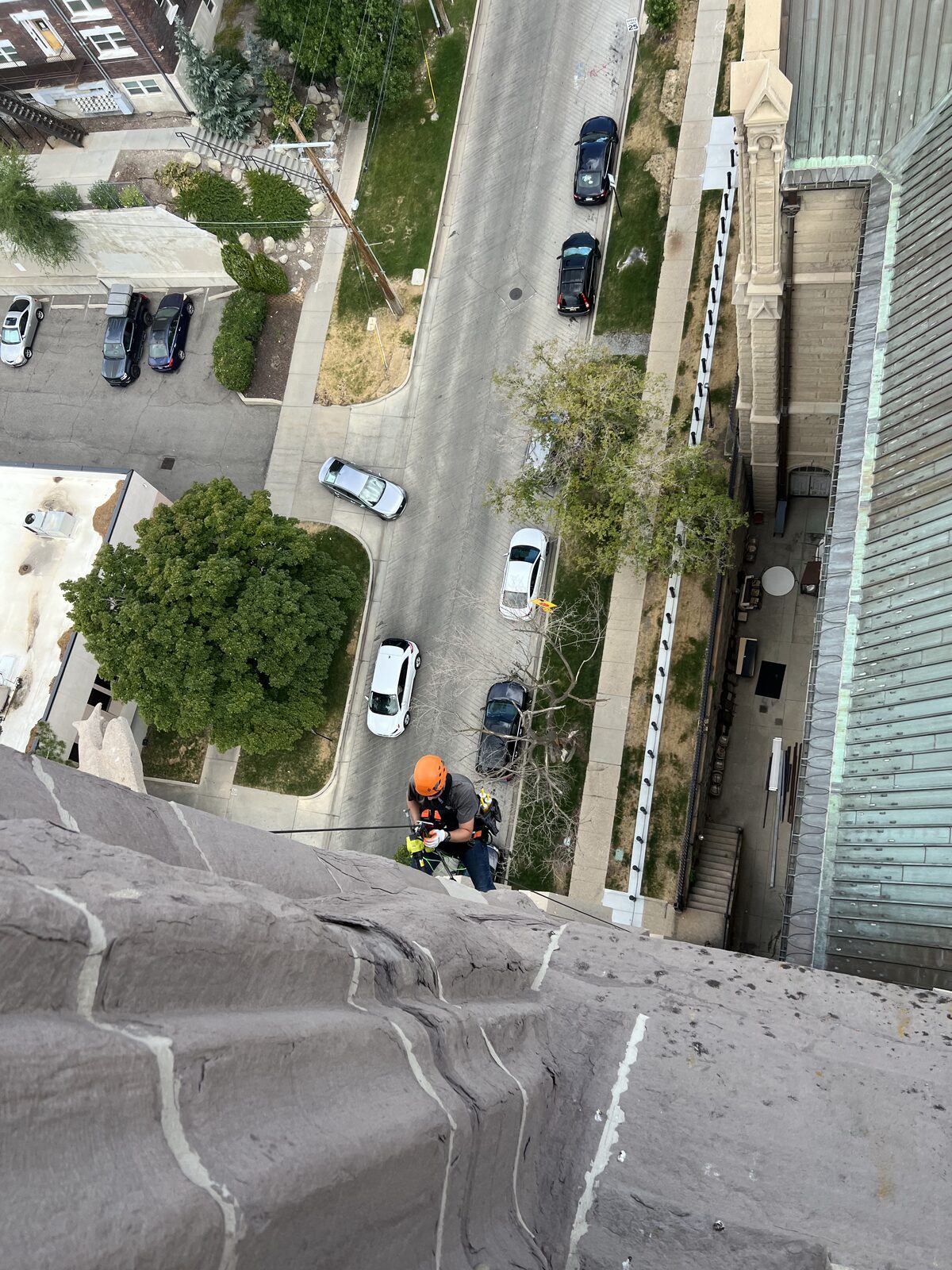
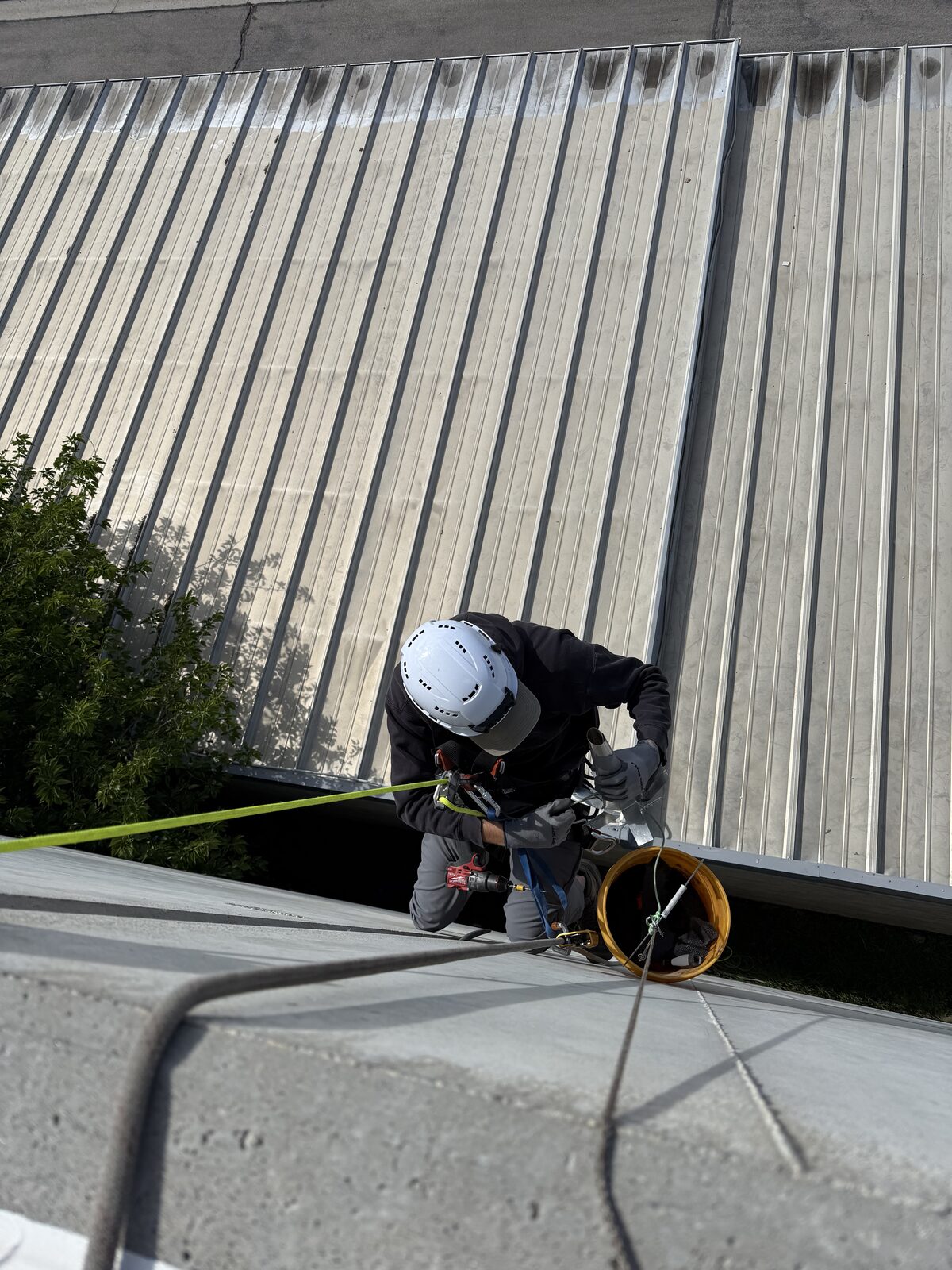
What upper-story bat exclusion looks like
These photos illustrate rope-access methods used to reach upper-story building exteriors. They were photographed outside Georgia and are not project documentation from a Georgia Wildlife Specialists job.
Georgia restricts who can work during maternity season
Georgia DNR says bat exclusions should be avoided from April 1 through July 31 because flightless young may be present. If exclusion must happen during that period, a licensed Nuisance Wildlife Control Operator must complete the work.
Inspection and planning can still move forward. The manager can approve roof access, ground controls, and repairs before the exclusion date.
Review Georgia DNR guidance for excluding bats from buildings
Georgia tall-building bat questions
Who can perform bat exclusion during Georgia maternity season?
Georgia DNR says work that must occur from April 1 through July 31 must be completed by a licensed Nuisance Wildlife Control Operator.
How do you tell a roost exit from bats feeding near the building?
An evening observation tracks where bats emerge from the exterior. That activity is compared with staining, droppings, open joints, and other evidence found during the close inspection.
Can an Atlanta office keep its entrance open during rope work?
It depends on where the active wall sits. If technicians or materials will be overhead, the entrance may need a temporary reroute. The access plan identifies that before work starts.
Why inspect brick joints above and below the reported floor?
The visible activity may connect to a longer joint or concealed cavity. Checking the full run reduces the chance of sealing one spot while leaving the same route open nearby.
What should a property manager provide for the first call?
The building address, floors where activity was seen, recent photos or video, roof-access information, and any limits on sidewalks or parking are useful starting points.
More Georgia bat information
Seeing bats around an upper floor in Georgia?
Call with the building address, the time and location of the activity, and any roof-access details. We will use that information to plan the survey.